
Vlad & Niki Supermarket game
Hippo Kids GamesEducational
4.7981.00 Reviews
- Version
- 2.3.4
- Installs
- 50.00M
- Age Rating
- Everyone
Screenshots

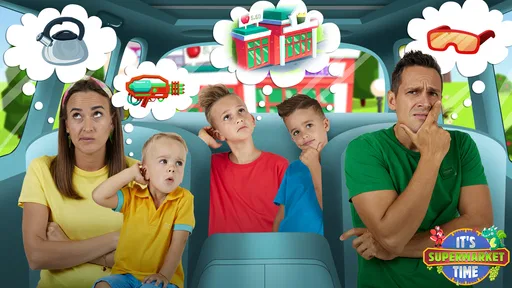
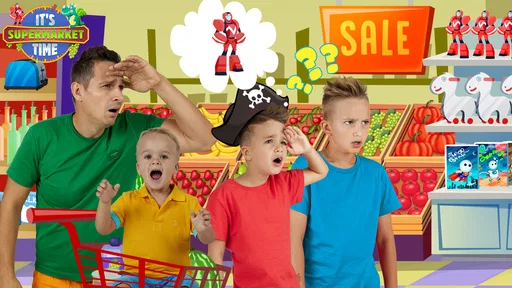
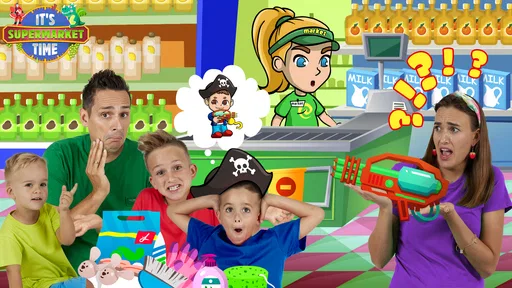
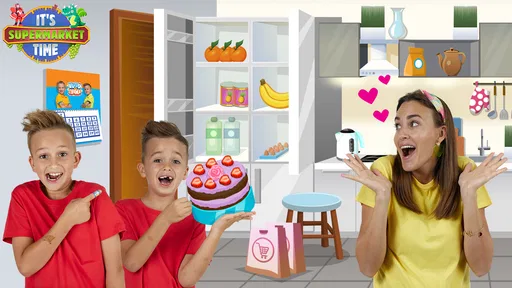
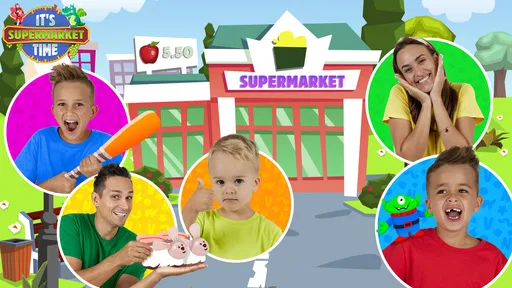

Our Review of Vlad & Niki Supermarket game
 Analysis by Appyee
Shopping becomes a surprisingly useful setting for a children’s game because it turns familiar routines into small decisions. After spending time with Vlad & Niki Supermarket, I found it works best as a gentle educational activity for young children who enjoy recognizable characters, bright scenes, and simple tasks. It is not trying to be a deep simulation or a demanding puzzle game. Its appeal comes from making an ordinary supermarket visit feel playful while encouraging children to notice objects, follow instructions, and complete a short sequence of actions.
The game is made by Hippo Kids Games and belongs to the educational category. It is free to download, rated for Everyone, and supports devices running Android 7.0 or later. The current version is 2.3.4, and the app has grown to more than 50 million installs with a 4.7 average from roughly 92 thousand ratings. Those figures suggest that it has found a broad audience, but they do not replace personal judgment: the right question is whether your child wants an easy, character-led activity rather than a more structured learning tool.
What the supermarket setting does well
The strongest part of the experience is its immediate familiarity. A child does not need a long explanation to understand the basic idea of entering a shop, looking at products, and helping Vlad and Nikita. That makes the first session approachable, especially for children who are still learning how to follow a game’s visual cues. I could see this being useful when a parent wants a calm activity connected to something the child already sees in everyday life.
Rather than presenting learning as a worksheet, the game places it inside a playful errand. Children can practice recognizing items, matching what they see with what is expected, and moving through a simple goal without being overwhelmed by complicated controls. The educational value is modest but practical. It is less about teaching a complete academic subject and more about reinforcing attention, vocabulary, ordering, and the idea that tasks can be completed step by step.
That distinction matters. I would not use this as a replacement for a dedicated early-learning program, reading practice, or an adult-led activity. I would use it as a short companion to those things. A child who has just visited a supermarket could play afterward and talk about which products appeared in the game, what they would put in a basket, or why a family shops for certain things. That conversation adds more value than simply handing over the device.
The characters also give the experience a clear emotional focus. Vlad and Nikita make the activity feel like helping familiar companions instead of completing an abstract exercise. For children who already recognize them, that can be enough motivation to return. For children unfamiliar with the characters, the supermarket theme still provides a straightforward entry point, so the game is not entirely dependent on existing fandom.
Simple interaction is an advantage for younger players
One of the practical strengths is the low barrier to entry. Young players often lose interest when an educational game begins with too many menus, rules, or reading requirements. Here, the theme does much of the explaining. A child can understand the purpose through the scene and the actions presented, while an adult can offer help without needing to teach a complicated control system first.
I especially like this kind of design for short supervised sessions. A parent can sit nearby, ask the child to name what appears on screen, and encourage them to explain the next step. That turns a passive screen break into a small language exercise. It is also a useful option for children who are not yet comfortable with games that demand fast reactions, precise timing, or advanced problem-solving.
There is a subtle trade-off here. Simplicity makes the game accessible, but it also limits how much it can challenge a child who has already mastered the basic interactions. The experience is more successful as an introduction than as a long-term test of skill. If your child quickly asks for harder levels, more complex rules, or a wider range of challenges, this may feel too gentle after the novelty of the supermarket wears off.
Three ways I would use it beyond casual play
My first practical suggestion is to connect the game with a real shopping list. Before opening it, ask the child to name two or three things your family might buy. During play, compare those ideas with what appears on screen. This gives the child a reason to pay attention and helps bridge the gap between the digital supermarket and a real one. It also avoids the common problem of educational games becoming isolated tapping exercises.
My second suggestion is to use the game for sequencing language. Instead of asking only whether the child completed a task, ask what happened first, what came next, and what they would do afterward. This is a small but meaningful way to practice memory and clear expression. The supermarket theme is particularly suitable because shopping naturally has an order: decide what is needed, find it, and finish the errand.
A third useful approach is to let the child lead while the adult deliberately avoids correcting every small mistake. Ask, “What are you looking for?” or “How did you know that was the right choice?” The goal is to encourage observation and explanation, not merely to reach the end quickly. This works better for learning than taking the device away at the first sign of hesitation.
These ideas are not extra game modes; they are ways to make the existing concept more valuable. On its own, the game offers a light activity. With a little conversation around it, it can support vocabulary, recall, and everyday decision-making without feeling like formal homework.
Where the experience starts to feel limited
The main weakness is that the supermarket concept can only carry so much variety. Once a child understands the basic rhythm, the activity may become predictable. That is not necessarily a flaw for its intended audience, since repetition can help younger children feel confident, but older children may find the choices too obvious. The same accessible design that welcomes a beginner can disappoint a player looking for meaningful strategy.
I also would not expect the game to replace real-world learning about money, nutrition, budgeting, or independent shopping. A supermarket setting can suggest those topics, but a child still needs an adult to explain them properly. If your priority is teaching prices, comparing quantities, reading detailed labels, or making a budget, a different educational app—or a real trip to the store—will do a better job.
Another point to consider is the free-to-play model. The game is free, but in-app purchases range from $0.99 to $35.99 per item. That does not automatically make it a poor choice, yet it means I would check the device’s purchase protections before letting a child play independently. For a young audience, the safest routine is to handle downloads and purchases as an adult and treat the free portion as a trial of whether the game suits the child.
This is also where the game may be less appealing to families seeking a completely uninterrupted educational session. Even when a child enjoys the central activity, the presence of optional purchases can make parents more cautious. I would not call that a reason to avoid it outright, but it is a real part of the decision, especially on a shared device used by several children.
How it compares with other children’s learning games
Compared with alphabet, number, or phonics apps, this game is more situational. It does not lead with a clear academic curriculum; it uses a familiar errand as the learning frame. That makes it a better fit for imaginative play and everyday vocabulary than for a parent who wants measurable practice in one particular school skill.
Compared with open-ended pretend-play games, it is more guided. The supermarket gives the child a goal and a recognizable path, which can help a player who becomes lost in games with too many choices. The trade-off is reduced freedom. Children who love inventing their own stories may prefer a sandbox-style experience where they can arrange scenes and create longer narratives.
Compared with fast arcade games for children, it is calmer and less dependent on reaction speed. That makes it suitable for a quiet break, a waiting-room activity, or a short session before bedtime, although families should still set their own screen-time boundaries. It is not designed to provide the excitement of a competitive game, and that is precisely why some children will find it comfortable while others will move on quickly.
In my view, its best position is between a cartoon-themed activity and a basic educational exercise. It offers more context than a collection of disconnected mini-games, but less depth than a dedicated learning platform. That middle ground is useful when you want something approachable and familiar rather than a complete teaching system.
Who will enjoy it most
I would recommend it first to preschool and early school-age children who like Vlad and Nikita or who respond well to role-play based on daily routines. It is particularly suitable for a child who needs gentle encouragement to follow a sequence, identify familiar objects, or talk about what happens during a shopping trip.
It may also work well for siblings of slightly different ages if the older child is willing to guide rather than compete. One child can control the game while the other names objects or predicts the next action. That turns a simple app into a cooperative conversation. The arrangement is less successful if the older child expects a serious challenge, because the younger player is likely to get more from the experience.
Parents should probably skip it when they want a focused curriculum, complex puzzles, or substantial replay depth. It is also not the best choice for children who dislike character-driven games or who become frustrated by activities that move at a deliberately easy pace. In those cases, a number-learning game, a reading app, or a more open-ended creative title would be a better match.
The Everyone age rating makes it broadly approachable for families, but age labels do not tell you whether the difficulty is right for your particular child. I would watch the first session and notice whether the child is exploring, talking, and making choices, or simply tapping through without understanding the context. That observation is more useful than assuming every child will find the same educational benefit.
Practical details before installing
The game was released on September 18, 2020, and its current version is 2.3.4. Those details are useful when checking compatibility or deciding whether an older device can run it, since Android 7.0 is the minimum operating system. The free entry point also makes it easy to test the experience before deciding whether it deserves a regular place on a child’s device.
Because the game is designed for children, I would prepare the device first rather than treating installation as the beginning of the review process. Set up purchase controls, remove unnecessary notifications, and decide whether the child will play alone or with an adult nearby. A few minutes of preparation can make the experience feel much more relaxed.
I would also keep sessions purposeful. Instead of leaving it open indefinitely, use it after a real shopping trip, before a conversation about food and household items, or as a short activity while an adult is occupied nearby. The game is more memorable when it has a connection to something outside the screen. Without that connection, its simple interactions may not hold attention for very long.
My final view after playing
Vlad & Niki Supermarket succeeds because it understands its scale. It is a friendly, accessible educational game built around a familiar routine, not a full supermarket simulation or a comprehensive lesson plan. I appreciate that it can give a young child a clear activity without demanding reading fluency, fast reflexes, or complicated instructions.
Its limitations are equally clear. The learning is light, the challenge may fade for older children, and the in-app purchase range means adults should manage the device rather than hand it over without preparation. Families looking for serious instruction in mathematics, reading, or money skills should choose a more specialized alternative.
For the right child, though, those limits are not deal-breakers. If you want a free starting point for playful supermarket-themed learning, especially for a child who enjoys Vlad and Nikita, I think it is worth trying. My recommendation is to treat it as a short shared activity and use questions, real shopping experiences, and conversation to extend what happens on screen. That is when this simple game becomes more than a way to pass time: it becomes a small, approachable prompt for learning through everyday life.
Verdict
Strengths of Vlad & Niki Supermarket game
- Bright, colorful visuals make the supermarket easy for young players to explore.
- Simple tap controls are suitable for children with limited gaming experience.
- Familiar shopping tasks can encourage basic recognition of everyday items.
- Short activities work well for quick play sessions.
- Friendly characters and playful sounds create an inviting atmosphere.
Limitations of Vlad & Niki Supermarket game
- Gameplay may feel repetitive after the first few sessions.
- Some content can be too easy for older children.
- Frequent ads or purchase prompts may interrupt play.
- Requires supervision if children can access in-app purchases.
- Performance may vary on older or less powerful devices.
Other Releases by Hippo Kids Games
View All
Hello Kitty: Kids Hospital
Educational4.8

Hello Kitty: Good Night
Educational4.8

Hello Kitty: Beauty Salon
Educational4.4

Vlad and Niki: Kids Piano
Music4.7
Similar Picks in This Category
View All
Little Panda Policeman
BabyBus4.0

Monster Trucks Game for Kids 2
Raz Games4.1

Little Panda's Chinese Recipes
BabyBus4.4

Little Panda's Restaurant
BabyBus4.4

Little Panda's Ice Cream Games
BabyBus4.3

Baby Panda Care
BabyBus3.8
Frequently Asked Questions
What is Vlad & Niki Supermarket, and what do you do in the game?
Vlad & Niki Supermarket is a colorful children’s game based on the popular Vlad and Niki characters. Players explore a playful supermarket, choose products, place items in a shopping cart, and interact with different sections and objects. The activities are designed to be simple and entertaining, making the game suitable for young children who enjoy pretend shopping and character-based play.
Is Vlad & Niki Supermarket suitable for young children?
The game is created with children in mind, using bright visuals, familiar characters, and straightforward interactions rather than complicated controls. Younger players may still need help navigating menus or understanding certain activities, especially if they are not yet comfortable using a touchscreen. Parents should review the recommended age, store description, and available settings before allowing independent play.
Does Vlad & Niki Supermarket require an internet connection?
Some parts of the game may work without a constant internet connection once the application has been installed, which can be convenient for travel or offline play. However, advertisements, optional content, updates, or store-related services may depend on connectivity. Because requirements can change between versions and platforms, it is best to check the current Google Play or App Store listing before downloading.
Are there advertisements or in-app purchases in Vlad & Niki Supermarket?
The availability of advertisements and purchases can vary depending on the version, operating system, region, and developer settings. Parents should carefully inspect the game’s store page for labels such as ads, in-app purchases, or family-related information. If children will play without supervision, parental controls and purchase restrictions are recommended to prevent accidental taps or unexpected charges.
Is Vlad & Niki Supermarket free to download and safe for children?
The game may be offered as a free download, although free versions can include advertising, optional purchases, or limited content. Downloading it through the official Google Play Store or Apple App Store is the safest approach because these platforms provide the verified listing and permissions information. Before installation, parents should check the developer, requested permissions, privacy details, age rating, and recent user reviews.
Play our best games!


